What is Ocean Habitat Conservation Course?
Ocean Habitat Conservation Course Training
Ocean Habitat Conservation Course certificate program in English provides comprehensive training in the science and practice of protecting marine ecosystems worldwide. This program equips learners with the knowledge and skills needed to understand, assess, and actively participate in conservation efforts that safeguard our planet's most vital aquatic environments.
Designed for marine biology students, environmental professionals, conservation practitioners, educators, and anyone passionate about ocean stewardship, this course bridges scientific theory with practical application. Whether you are pursuing a career in marine science, seeking to enhance your environmental expertise, or simply wish to make a meaningful contribution to ocean health, this program offers the foundational knowledge and actionable insights necessary to understand and address the complex challenges facing marine habitats today.
What is Ocean Habitat Conservation?
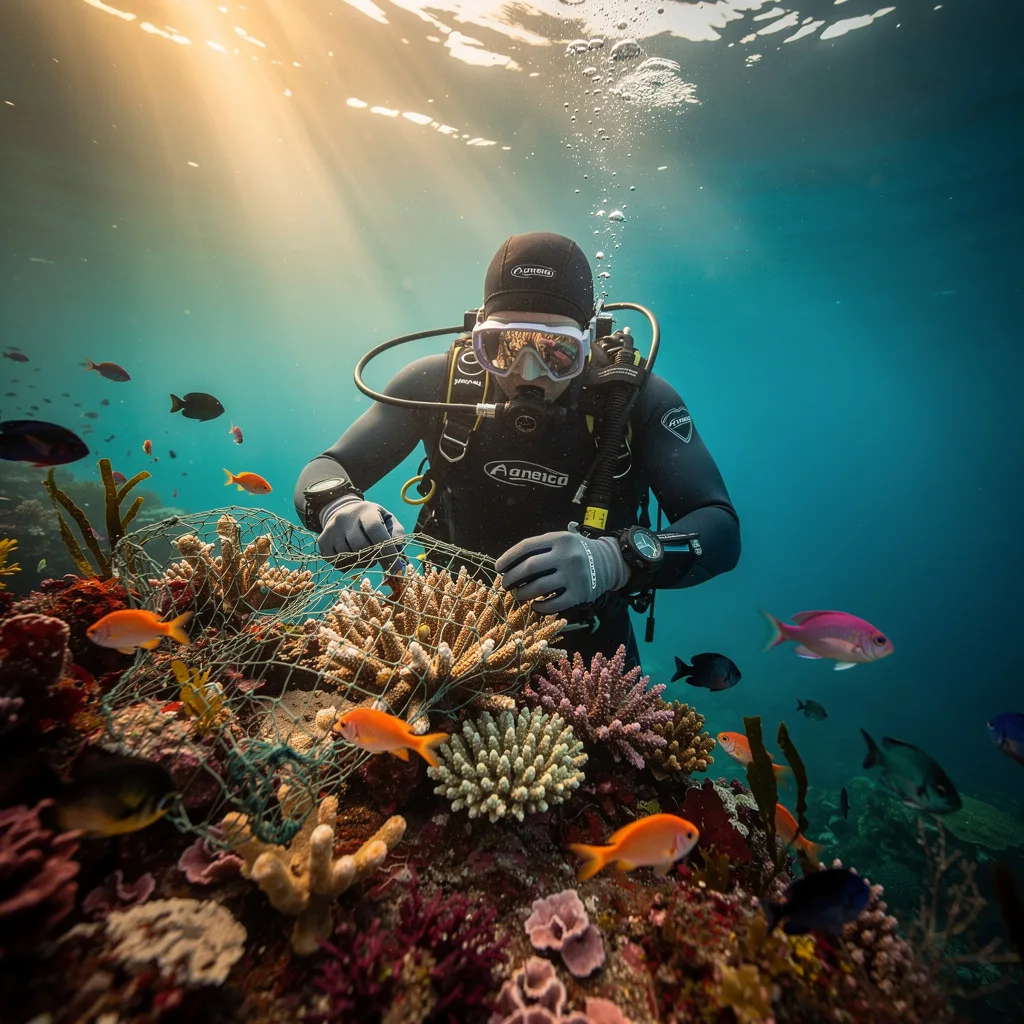
Ocean habitat conservation is the multidisciplinary science and practice of protecting, managing, and restoring marine ecosystems that support the incredible diversity of life found in Earth's oceans. These habitats—from shallow coastal wetlands to the deepest ocean trenches—encompass a vast array of ecosystems including coral reefs, mangrove forests, seagrass meadows, open ocean pelagic zones, and hydrothermal vent communities. Each habitat plays a unique and irreplaceable role in maintaining global ecological balance, supporting fisheries, protecting coastlines, and regulating climate through carbon sequestration.
The importance of ocean habitat conservation has never been more urgent. Oceans cover over 70% of Earth's surface and contain 97% of its water, generating more than half of the oxygen we breathe through phytoplankton photosynthesis. They absorb approximately 30% of atmospheric carbon dioxide and over 90% of excess heat from human activities, making them critical climate regulators. Marine ecosystems support more than two million species and provide livelihoods for millions of people worldwide, yet these systems face unprecedented threats from pollution, overfishing, coastal development, and climate change impacts including warming and acidification.
Key concepts in this field include ecosystem-based management, marine protected area (MPA) design and implementation, habitat connectivity and resilience, biodiversity conservation, sustainable resource utilization, and restoration ecology. Understanding these principles requires knowledge of marine biology, oceanography, fisheries science, climate science, and conservation policy. Effective habitat conservation combines scientific research with stakeholder engagement, policy development, and community-based action to create lasting positive outcomes for both marine ecosystems and human societies that depend upon them.
What Will This Course Bring You?
- You will learn to identify and classify distinct marine zones and ecosystems, distinguishing between photic and aphotic environments, coastal and pelagic habitats, and understanding how physical oceanographic factors create unique ecological niches that support specialized marine communities.
- You will gain expertise in coral reef biology, including the symbiotic relationships between coral polyps and zooxanthellae, reef formation processes, and the critical role these ecosystems play in supporting 25% of all marine species while protecting coastlines from erosion and storm damage.
- You will develop the ability to analyze deep-sea habitats and open ocean ecosystems, understanding how organisms adapt to extreme pressure, darkness, and cold, and recognizing the biodiversity significance of abyssal plains, seamounts, and hydrothermal vents.
- You will master the ecological functions of coastal wetlands, including mangrove forests, seagrass beds, and salt marshes, learning how these "blue carbon" ecosystems sequester atmospheric carbon, filter pollutants, stabilize shorelines, and serve as essential nursery habitats for commercially important fish species.
- You will learn to construct and analyze marine food webs, identifying keystone species, understanding trophic level interactions, and evaluating how biodiversity loss at any level can cascade through entire ecosystem networks, affecting fisheries productivity and ecosystem stability.
- You will acquire skills in identifying and assessing pollution threats to marine habitats, including plastic contamination, chemical runoff, nutrient loading, and heavy metal accumulation, while learning to evaluate how these contaminants biomagnify through food chains and impact marine organism health.
- You will understand the mechanisms and consequences of ocean warming and acidification, including how increased atmospheric CO2 alters marine chemistry, compromises calcification in shell-building organisms, shifts species distribution ranges, and disrupts physiological processes in marine life.
- You will develop practical knowledge of sustainable fisheries management, including stock assessment methods, maximum sustainable yield calculations, ecosystem-based fisheries management approaches, and bycatch reduction strategies that minimize ecological impacts while supporting coastal economies.
- You will learn to design, evaluate, and implement marine protected areas, understanding zoning strategies, no-take reserves, multiple-use MPAs, connectivity corridors, and the scientific criteria for establishing effective conservation networks that achieve biodiversity outcomes.
- You will gain hands-on knowledge of habitat restoration techniques, including coral propagation and transplantation methods, seagrass bed restoration, mangrove reforestation strategies, artificial reef deployment, and biomimicry approaches that accelerate ecosystem recovery.
- You will develop the capacity to engage with global ocean conservation initiatives, understanding international frameworks such as the UN Sustainable Development Goals and Convention on Biological Diversity, while learning how to translate scientific findings into effective advocacy, policy recommendations, and community action.
Curriculum
12 Units1. The Vital Role of Ocean Habitats
30 min
2. Ocean Ecosystems and Marine Zones
30 min
3. Coral Reef Ecosystems: Structure and Importance
30 min
4. Open Ocean and Deep-Sea Habitats
30 min
5. Coastal Habitats: Mangroves, Seagrasses, and Wetlands
30 min
6. Marine Biodiversity and Food Webs
30 min
7. Human Threats: Pollution and Marine Contamination
30 min
8. Climate Change Effects: Warming and Acidification
30 min
9. Overfishing and Sustainable Marine Resource Management
30 min
10. Marine Protected Areas and Conservation Strategies
30 min
11. Habitat Restoration and Recovery Techniques
30 min
12. Global Ocean Conservation and Taking Action
30 min
Exam – Ocean Habitat Conservation Course
20 Questions • 70% Pass • 30 min
Unlock All Units for Free
Create an account, enroll in the course, and start with the first unit right away.
Exam – Ocean Habitat Conservation Course
20 Questions • Pass: 70% • 30 min
Course Duration
360
Total Minutes
12
Unit
1
Final Exam
~30
Min / Unit
Ocean Habitat Conservation Course Certificate Program
Document Your Skill
Those who pass the 20-question, 30-minute exam with 70% receive the Ocean Habitat Conservation Course Certificate.
Stand Out on Your CV
By adding your certificate to your CV, gain a professional reference in job applications and stand out from the crowd.
Career Advantage
Catch Wisdom certificates are recognized by HR departments and increase career opportunities.
CERTIFICATE FEE
At the end of the course, an online exam consisting of 20 questions with a 30-minute time limit is given. The exam appears automatically after you complete the topics. Anyone who scores at least 70 out of 100 on the certificate exam is awarded the Ocean Habitat Conservation Course Document (certificate of attendance). You can add the certificate you earn to your CV for job applications in the many sectors listed above, and use it as a reference proving that you took this interactive course.
The Certificate of Achievement you receive with the Ocean Habitat Conservation Course course program holds value that proves your personal and professional development in the business world. By adding it to your CV, it can serve as an important reference in your job applications. Moreover, compared with certificates from other private training institutions, Catch Wisdom certificates are offered to our participants at a much more affordable price.
Because HR departments recognize Catch Wisdom as a reputable institution in this field, they value these certificates and may evaluate your job applications favorably. For this reason, a Ocean Habitat Conservation Course course certificate from Catch Wisdom can make your applications more attractive and place you in an advantageous position in the business world.
For more information, we recommend visiting the Support page.
Certificate in 7 Languages
Earning success certificates from our courses is now more meaningful and global. With certificates available in Turkish, English, German, French, Spanish, Arabic, and Russian, we fully unlock the potential of students worldwide.
Why Certificate in 7 Languages?
-
01
Global Skill Development
Receiving your certificates in 7 different languages strengthens your communication skills as you engage with more people worldwide. It lets you operate more confidently and capably on the international stage.
-
02
International Job Opportunities
Employers may see your certificates in multiple languages as a sign of your ability to seize global opportunities. You can open more doors to new jobs and projects.
-
03
Cultural Richness
The chance to earn certificates in different languages helps you build closer ties with various cultures and broadens your worldview. It enriches your global perspective and deepens cultural understanding.
-
04
Ability to Participate in International Projects
Multilingual certificates give you an edge to work more effectively on international projects. They boost your chances of leadership and participation in diverse projects in the business world.
-
05
Prove Yourself on the Global Stage
Certificates in multiple languages let you showcase your skills and knowledge worldwide. You can become an internationally recognized professional.
Language diversity opens worldwide opportunities. If you want to prove yourself in the international arena, join our online Ocean Habitat Conservation Course course program and begin this journey with us.
Frequently Asked Questions (FAQ)
Is this course paid?
How do I join the course?
Can I take the course at my own pace?
How can I get my certificate?
What are the advantages of the Certified Certificate?
Boost Your Career
Take a new career step with the Ocean Habitat Conservation Course course. Add your certificate to your CV, stand out in job applications, and open the door to new opportunities in the industry.
StartStudent Reviews
No reviews yet
Enroll in this course and be the first to leave a review about your experience with Ocean Habitat Conservation Course.
Start